Since the dawn of civilisation, materials have shaped human progress: every breakthrough in materials has led to a technological breakthrough. Today, materials still remain at the heart of the energy, digital and medical transitions, and France’s reindustrialisation by 2035-2050 will depend largely on the nation’s ability to control its value chains, whilst balancing carbon neutrality with strategic sovereignty.
According to Bpifrance’s 2025 Industry Observatory, green industries are already driving growth: more than forty new industrial sites have been established since 2024, fuelled by the rise of the circular economy, bio-based materials, green chemistry and waste recovery. Two key drivers are emerging from this momentum: new materials for energy on the one hand, and biomaterials and bio-based materials on the other.
Materials at the heart of the energy transition
Europe is lagging far behind in terms of technology. A few figures are enough to give an idea of the scale of the situation: 90% of critical metals (lithium, cobalt, nickel) are imported; China controls 77% of rare-earth refining, two-thirds of lithium processing, 50% of the lithium-ion battery market and 90% of NdFeB (neodymium-iron-boron) permanent magnets. Without breakthrough technologies, this lag will remain structural.
Permanent magnets represent an immediate strategic challenge. The French market for NdFeB magnets is expected to triple over the next ten years, driven by electromobility, wind power and electronics. Their rare-earth content makes them difficult to replace, particularly in high-temperature applications. France is focusing on recycling to reduce its dependence: in 2025, the CEA, Orano and Valeo opened a pilot plant as part of the Magnolia project, whilst Caremag, based in the Lacq industrial basin, is set to begin producing separated rare earths from 2026. The challenge remains: to establish a collection network and develop truly competitive industrial processes.
Batteries represent a huge market, one that is still dominated by Asia. Whilst Li-ion batteries will remain dominant in the short term, sodium-ion technologies could become the norm for stationary storage. France has real strengths – cutting-edge R&D through RS2E and CEA-LITEN, and recognised players in the recycling sector such as Orano, Eramet, SNAM and Mecaware – but it is lagging behind industrially by around fifteen years. There are four key priorities for addressing this:
- supporting the industrialisation of sodium-ion technology, led in particular by Tiamat;
- stepping up R&D into solid-state, lithium-sulphur and zinc-air batteries;
- securing access to raw materials, whether it be geothermal lithium from Alsace, spodumene from the Allier region or ongoing projects in Sweden;
- developing European recycling and refining capacity, building on the ban on the export of spent batteries and black mass (a by-product resulting from the shredding and processing of spent batteries).
Low-carbon hydrogen offers real potential for France. Whilst 99% of the world’s hydrogen is still produced from fossil fuels, France’s low-carbon electricity mix paves the way for competitive “green” hydrogen production. Several technologies are currently under development: solid oxide electrolysis (Genvia), anion exchange membranes (Gen-Hy) and plasmalysis (plasma decomposition), which is still at the research stage. The success of this sector will depend on better coordination between R&D and industrialisation – a prerequisite for avoiding a repeat of past failures.
Eco-design completes the picture by directly addressing the carbon footprint of materials. Clinker-free cements, which reduce emissions by 90% and have already been used in constructing the Hyperion Tower in Bordeaux, self-healing coatings developed by Arkema for the aerospace industry, and Constellium’s aluminium-lithium alloys for Airbus – which reduce the weight of aircraft structures by 10% – provide concrete examples of what this approach can achieve on an industrial scale.
Biomaterials: a unique driver of sovereign self-sufficiency
Biomaterials encompass two distinct categories: medical biomaterials, which have great potential but are still held back by European regulations, and bio-based materials, which represent the real industrial challenge for France. Their growth speaks for itself: their market share has risen from 1% to 11% between 2016 and 2025, a trend driven by well-positioned French players. Arkema is the longest-standing example of this: its Rilsan – a bio-based polyamide-11 derived from castor oil – has been in production for over 70 years and has established itself in sectors as diverse as the automotive, energy, healthcare and food industries, thanks to its technical performance and favourable carbon footprint.
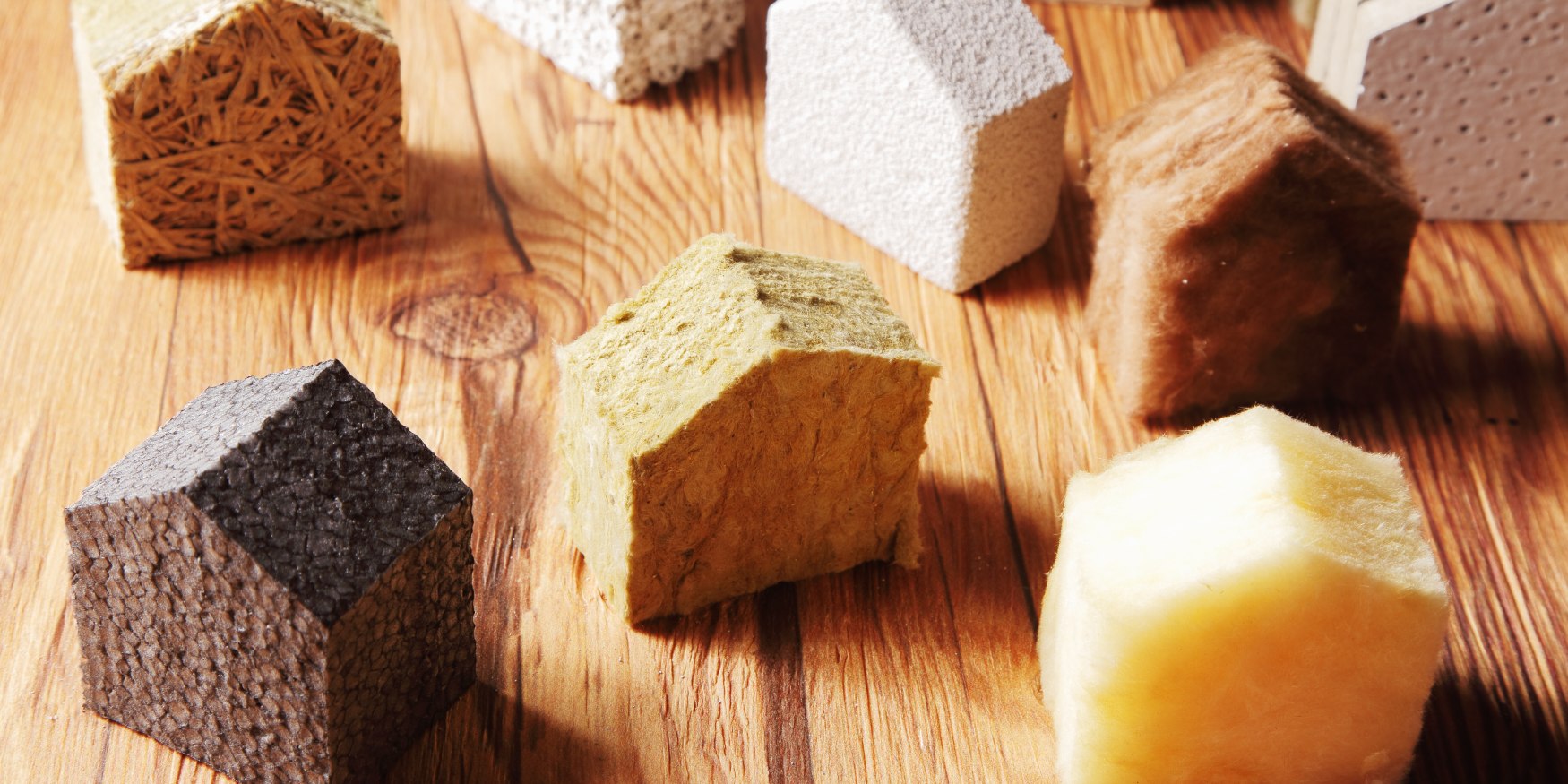
The construction sector is the most advanced in this regard, driven by an incentive-based regulatory framework: the target of 25% bio-based materials in public buildings by 2028, combined with the RE2020 requirements promoting carbon sequestration, is creating structural demand. Bio-based materials already account for 20% of the market share in certain segments of the industry, such as loft conversions. Cavac Biomatériaux, based in the Vendée, produces 150,000 cubic metres of hemp insulation per year and epitomises this move to industrial scale. On the innovation front, the self-healing concretes developed by BASF and LafargeHolcim – which incorporate calcifying bacteria – extend the service life of structures by thirty to fifty years.
Cosmetics and personal care products are a less visible but significant driver, accounting for 30% of bio-based volumes (excluding wood). Bio-based surfactants already dominate the market in this sector, and companies such as TotalEnergies and Corbion produce PLA for use in food packaging and certain biodegradable implants.
Packaging and textiles, on the other hand, are lagging behind, with bio-based materials still accounting for less than 5% of the market, held back by investment costs and resistance from established supply chains. France does, however, have a tangible competitive edge with its flax and hemp, two key resources for low-carbon textiles, of which it is one of Europe’s leading producers.
Energy, for its part, calls for a strategy of selective biomass utilisation. A joint report by the French Academy of Technologies and the French Academy of Agriculture (2025) recommends concentrating the use of bio-based materials in areas where they are irreplaceable – aviation, chemicals and materials – and supporting second-generation biofuels: BtL (biomass-to-liquid) and HVO (hydrotreated vegetable oils). France has a number of solid structural assets: 90% of its land is dedicated to agriculture or forestry, 82% of its biomass comes from arable crops, and it is a European leader in flax and hemp production.
Start-ups, finally, represent a promising new wave in industry. Companies such as ALPHA Biotech, Blendcel and FunCell are currently working on scaling up innovative solutions: cellulose foams, alternatives to Plexiglas, and additives for cellulose-based materials. The potential is real, but logistical and financial challenges remain the main obstacles to be overcome.
Conclusion
Materials have always been the driving force behind industrial revolutions. Essential to the energy and ecological transitions, they now pose challenges relating to sovereignty and sustainability that France cannot afford to ignore. Yet the nation does have real strengths: a strong position in biomaterials, world-class R&D, and the potential – provided it streamlines its supply chains and accelerates industrialisation – to make up lost ground in the field of critical materials.
Reindustrialisation will depend on three interlinked factors: diversifying resources, accelerating innovation, and ensuring long-term demand through public procurement. It is only by doing so that France will be able to build a truly resilient, competitive and self-reliant industry.
Pour vous abonner, rendez-vous sur le site de votre association partenaire ou cliquer ici.
La Revue des Mines est produite grâce au temps de ses bénévoles et à ses contributeurs. Pour nous rejoindre, écrivez-nous !
Contribuer